|
|
Excellence
in Information Technology and Intelligent Video Systems NetWatch
Surveillance Products |
||||||||||||||||
|
NetWatch®
Intelligent
Surveillance Systems Cutting Edge
Security Solutions NetWatch is a suite of networked
video surveillance products, developed by AR&T to provide security
conscious organisations with the tools needed to manage IT based CCTV
security. |
|||||||||||||||||
|
|
|||||||||||||||||
|
The
NetWatch suit of products guarantees end users have a fully integrated CCTV
surveillance system able to detect incidents and to communicate with, and transfer
video data to, all required locations without loss of video quality or data
integrity. The use of
Intelligent Video Systems will eventually transform the way companies and
governments protect high value assets. The realisation that machine 'visual
intelligence' can be more reliable and cost effective than humans for routine
surveillance will enable users to reduce surveillance budgets and increase
the effectiveness of response teams and prosecutions. |

|
||||||||||||||||
|
|
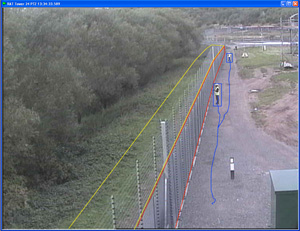
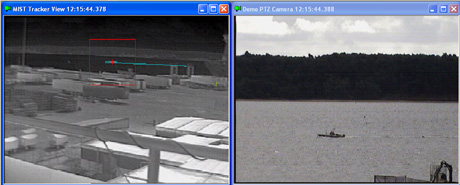
MIST
Is a new and
sophisticated object detection and tracking system capable of providing an early
indication of intrusion from objects (including people) entering or moving
through restricted areas or routes. The system detects and tracks objects
that obey a set of qualifying rules. When these objects cross 'Virtual Trip
Wires' placed in the video image by the system administrator, the system
raises an alert for the operator and gives a clear and precise visual
presentation for the cause of the alert. MIST identifies
potential threats and, using the NetWatch infrastructure, alerts users and
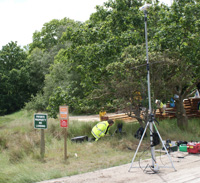
enables informed responses. MIST-RD This Rapid Deployment system is designed specifically
to address the issues surrounding long-range covert surveillance. It is
easily transported, requires no mains power or wired communications and can
be deployed by a single person. |
||||||||||||||||
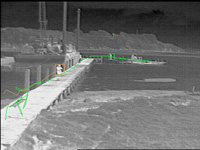
Sea Ranger
This suite of
surveillance products provides unprecedented levels of intrusion detection for
Ports, Docks, Harbours and Waterways. Using Thermal Imaging
cameras, the system will detect and track all objects in the cameras field of
view. Sections of water and dock
areas can be designated 'restricted'.
All objects that meet pre-defined criteria will raise an alert when
they enter these restricted areas. |
|
||||||||||||||||
|
|
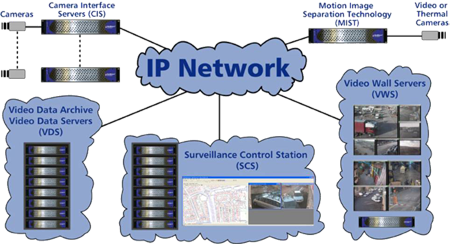
Camera Interface
Server (CIS)
The CIS captures video
from cameras and streams video data to local storage devices and the network.
Operators at Surveillance Control Stations have control over any number of
CIS units and can command them to: control active cameras, download current
and historic video data, control the Visual Motion Detectors, update the
Alarm Status lists etc. Camera Interface Servers
also provide physical interfaces for PTZ control, Eternal Alarm Inputs,
External Alarm output, Audio devices, Local Area Networks, ADSL and PSTN
Networks etc. These are intelligent
data processing 'outstations' and video data servers used to run many sub
applications including MIST (Motion Image Separation Technology). In use by UK Police
forces and major City Watch systems. Single channel, to 32 video channels per
recorder, each with motion detection and scheduled recording. Access and data
can be password protected. Recorders also provide data integrity validation. Complies with UK
standards for gathering video evidence. |
||||||||||||||||
|
Video Data
Server (VDS) Video Data Servers
provide a networked archive of video data allowing any Surveillance Control Station
to replay or download historic data (typically from a few seconds old, to
many months). VDS’s are employed to provide a data backup increasing system
availability. They are used particularly where the primary CIS may be at risk
from criminal damage or where radio networks may be temporarily unavailable. |
|
||||||||||||||||
|
|
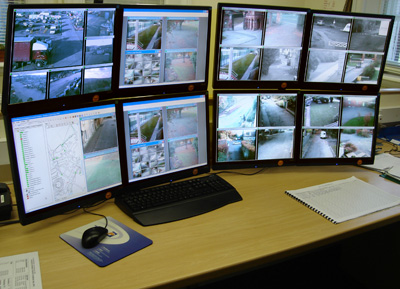
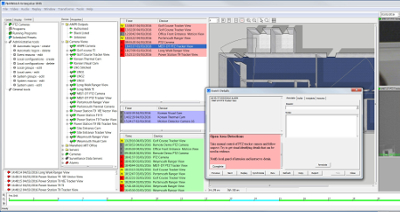
Surveillance
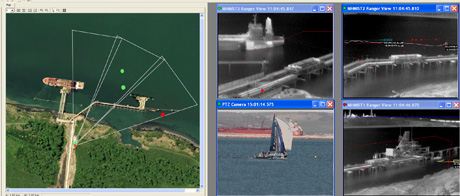
Control Station (SCS) The SCS provides the
human interface with the networked servers; these include the above Camera
Interface Servers, Video Data Servers and Video Wall Servers. Surveillance
Control Stations enable operators to control all system functions and to view
all live and recorded video. They also provide tools for camera control,
downloading video, audio communication, map functions, and server
configuration and maintenance. Each CIS maintains its own event logs,
recording the operational status of all its cameras and its hardware. The SCS
provides operator access to these event logs to enable maintenance and audit
of the system. The SCS also provides basic CD and DVD creation tools allowing
export of video data to third parties. |
||||||||||||||||
|
Video Wall
Server (VWS) Used in conjunction with
Surveillance Control Stations, Video
Wall Servers route selected video directly from CISs or VDSs to selected
video wall screens. Each VWS sits between
the LAN and two screens of any physical size. Each screen can display
multiple images of 1, 2, 5, or 9 camera views. Any number of screens can be
used. |
|
||||||||||||||||
|
|
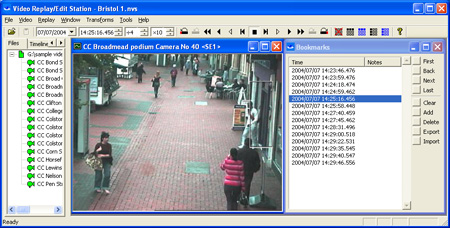
Video
Editing Work Station (ViEWS) ViEWS software can
reside on the SCS or on a separate workstation. It enables video to be viewed
and edited ‘off line’ in preparation to be used as evidence. Clips can be
created and ‘Personal Privacy’ editing can be accomplished. In addition, a ViEWS workstation can
perform the following conversions: Raw Video Data In, Edited Video Data Out.
Raw PAL Video In, Edited PAL Video Out. Raw Video Data In, Edited PAL Video
Out. Raw PAL Video In, Edited Video Data Out. |
||||||||||||||||
|
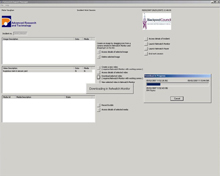
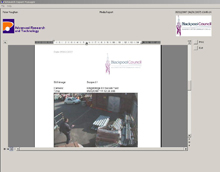
Evidence
Submission Manager (ESM) ESM provides the management
and database tools to maintain and demonstrate compliance with the Data
Protection Act. It contains all the features of ViEWS, produces video
evidence on CD or DVD media and provides a full audit trail of all actions
and processes undertaken up to the point of release of the media to third
parties. ESM produces all release
form, receipts, CD labels, management reports up to, and including closure of
the incident where this is appropriate. |
|
||||||||||||||||
|
|
EyeLynx
EyeLynx provides an
entry-level to Networked Digital CCTV, allowing small businesses and shops to
benefit from the infrastructure provided by larger Town Centre or corporate
schemes. EyeLynx is fully compatible with the NetWatch Suite of products and
can improve the effectiveness of surveillance at commercial sites of any
type. EyeLynx brings benefits
to owners of small businesses by alerting them directly when security at
their premises is threatened. Based on the features of NetWatch, EyeLynx is
designed specifically for surveillance in small to medium premises, where low
cost and effective security is paramount.
The system is offered with options to suit all retail surveillance applications
including on site monitor screens, digital recording and LAN connectivity. A
separate Buyers Guide is available to help to choose the most suitable
options. |
||||||||||||||||
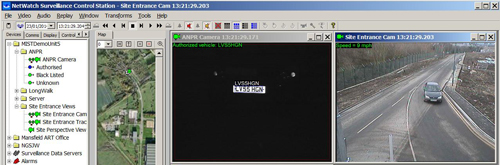
Automatic Number Plate
Recognition (ANPR)
Developed by AR&T
for site traffic management, the ANPR system is fully compatible with the
NetWatch suite of products and uses the NetWatch ‘Surveillance Control
Station’ for the human interface. The system is used to
identify and read car number plates in motion and to provide alpha / numeric
output data from the source video. This data can then be compared with user
data for correlation. Depending on the rules applied, vehicles may then be
admitted or stopped by automatic barriers. Vehicle presence at sites can be
verified as they can be automatically logged in and out. |
|||||||||||||||||
|
ViBASE
Routine video
surveillance produces huge amounts of video data that may need reviewing by
specially trained staff. The review
process is labour intensive and may need repeating several times to establish
patterns of activity or behaviour that may lead to, or have caused, breaches
of security. ViBase is used to automatically search video
archive files to find operator specified events. |
At
the time of archiving, the video data is 'tagged' with key words related to
activities in the picture. For
instance, the occurrence of a service vehicle or cleaning staff can be simply
'associated' with a section of video.
If at any time there is a need to review all video containing a
service van, then that is made the search criteria, and all such instances
are made available to the operator from the video archive. There is no limit to the size / duration
of the archive. |
||||||||||||||||
|
Link to NetWatch Datasheets in .pdf |
|
||||||||||||||||
|
|
|||||||||||||||||